Fire learning hub
Fire Safety
Duty-holder guides for the Regulatory Reform (Fire Safety) Order 2005, the Fire Safety Act 2021 and the Building Safety Act 2022, from fire risk assessments to enforcement notice response.
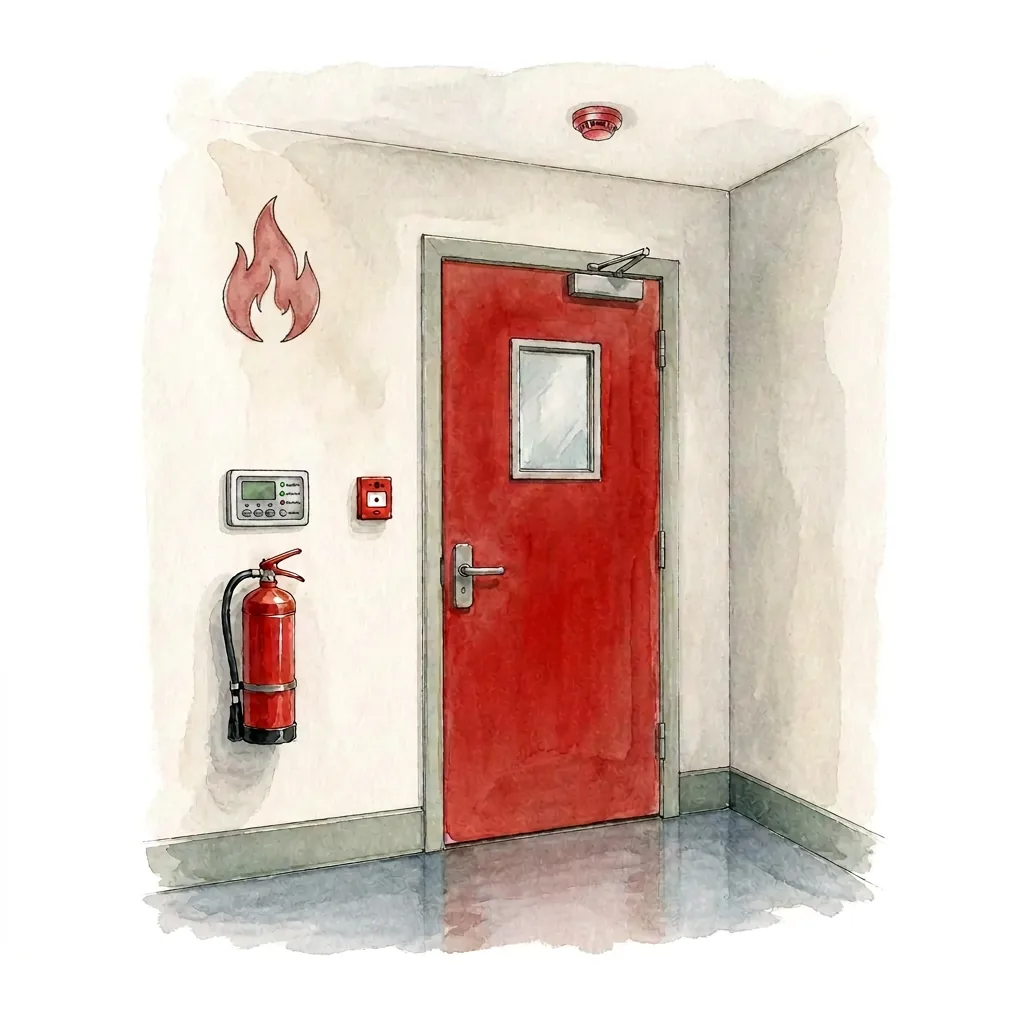
In short
The Responsible Person under the Fire Safety Order must keep a suitable and sufficient fire risk assessment, act on its findings, and cooperate with the local Fire and Rescue Authority. Enforcement notices carry unlimited fines and up to two years' imprisonment.
Legal snapshot
What the law says
- Regulatory Reform (Fire Safety) Order 2005
- Primary duty on the Responsible Person to assess and manage fire risk.
- Fire Safety Act 2021
- Confirmed the external walls, flat entrance doors and structure of multi-occupied residential buildings fall within the FSO.
- Fire Safety (England) Regulations 2022
- Duties for high-rise residential: floor plans, wayfinding signage, secure information box.
- Building Safety Act 2022
- Golden thread of information and the Building Safety Regulator regime for higher-risk buildings.
On the ground
Common problems & fixes
- FRA older than 12 months or not fit for purposeFix, Commission a Type 1 FRA (or higher where compartmentation is suspect) from an IFE or ARPI-registered assessor.
- Fire doors failing quarterly inspectionFix, Appoint a BM TRADA or FIRAS installer to remediate to BS 8214 and record every door on a schedule.
- Fire alarm faults ignored on the log bookFix, Move detection to a BAFE SP203-1 maintainer with a 4-hour attendance SLA.
- Enforcement or Prohibition Notice servedFix, Track the appeal window, brief the RP, and evidence remediation to the enforcing officer inside the notice period.
Fire Risk Assessment Requirements UK: Who Needs One
Fire risk assessment requirements explained: who must have one, PAS 79 and Types 1 to 4, assessor competence, review frequency and enforcement.
Read the full guideAll fire guides
9 guides Fire
The 10 Most Breached Fire Safety Order Articles
Article 14 generated 11,286 breaches in England in 2026. What each of the ten most breached Fire Safety Order articles needs and the evidence that closes it.
Read guide → Fire
Prohibition Notice: What Happens Next
A fire prohibition notice takes effect immediately. What it stops, the 21 day appeal window, and how to get the notice lifted without wasting weeks.
Read guide → Fire
Fire Safety Enforcement in England: 2026 Data
Prohibition notices rose 27% in a year in England while prosecutions fell. What the new MHCLG fire enforcement statistics mean for duty holders.
Read guide →FireHow to choose a fire risk assessment company
No licence is needed to sell fire risk assessments in the UK. Twelve checks to run before you appoint one, and the answers that should worry you.
Read guide → Fire
Passive Fire Protection Surveys: Compartmentation Explained
Passive fire protection surveys: when a compartmentation survey is needed, Type 2 and Type 4 assessments, FIRAS, IFC and Q-Mark certification, reports.
Read guide → Fire
Fire Door Inspection Requirements: Duties and Frequency
Fire door inspection requirements: quarterly and annual checks under the Fire Safety (England) Regulations 2022, other premises, competence and records.
Read guide → Fire
Fire Risk Assessment Cost UK: What Drives the Price
Fire risk assessment cost explained for UK duty holders: the drivers by building type and size, what a quote must itemise, and the red flags to reject.
Read guide → Fire
Fire Safety Enforcement Notice: The 28-Day Response Plan
Fire safety enforcement notice with 28 days to comply? The day-by-day response sequence, the evidence pack, extension requests and the appeal route.
Read guide →FAQ
Frequently asked
- Who is the Responsible Person?
- In workplaces, the employer with any measure of control. Elsewhere, the person in control of the premises in connection with a trade, business or undertaking, or the owner if there is no such person.
- How often should a fire risk assessment be reviewed?
- It must be kept under review and revised whenever there is reason to suspect it is no longer valid or there has been a significant change. Most managing agents refresh annually as a minimum.
- What is a Type 1 FRA versus Type 4?
- Type 1 is a non-destructive assessment of common parts. Types 2 to 4 add destructive inspection and coverage of flats. Type 4 is the most intrusive, typically reserved for post-refurbishment or after a serious concern.
Need fire handled now?
Submit a brief and the desk will match you with three verified specialists in 48 hours. Free for building owners and managers, accreditation-verified, no pressure to appoint.
Submit a brief, free